Tartu
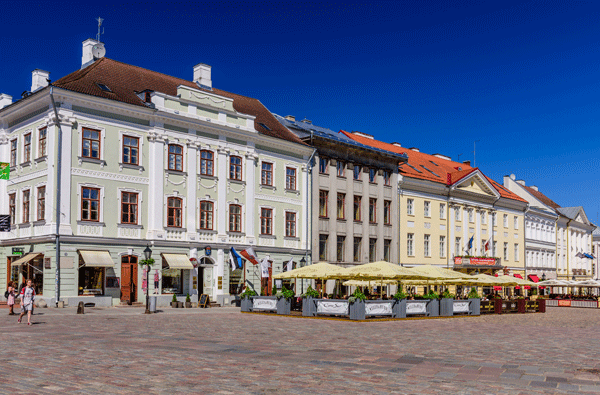
Urban RiverfrontThe Emajõgi River cuts through Tartu's center, its banks lined with cafés and student cyclists pedaling between the university's scattered neoclassical buildings. Walk Raekoja plats, the main square, and you'll find the Town Hall anchoring one side, its pink façade reflected in the water feature below—locals call it the Kissing Students fountain. The old town radiates outward in narrow lanes where Soviet-era apartment blocks sit shoulder-to-shoulder with 18th-century merchant houses, many painted in faded yellows and greens. Toome Hill rises to the east, crowned by the ruins of the cathedral and offering views across the river valley. The Tartu Art Museum occupies a former mansion on Raekoja plats itself, while the Estonian National Museum sprawls across a former Soviet airfield on the city's edge, its architecture alone worth the trip. Students dominate the rhythm here—Tartu is home to the University of Tartu, founded in 1632—so the bar scene on Kompanii Street pulses most nights, and the bookshops and secondhand record stores reflect an intellectual, slightly bohemian edge.
 VRBO Vacation Rentals
Learn More
With over 2 million bookable vacation rentals, Vrbo connects homeowners with families and vacationers looking for something more than a hotel for their trip. The Vrbo community offers families an array of rental property types such as condos, cabins, lake rentals, beach houses, and more. Discover properties in destinations that everyone dreams of visiting.
VRBO Vacation RentalsWith over 2 million bookable vacation rentals, Vrbo connects homeowners with families and vacationers looking for something more than a hotel for their trip. The Vrbo community offers families an array of rental property types such as condos, cabins, lake rentals, beach houses, and more. Discover properties in destinations that everyone dreams of visiting.
Learn More
Planning Your Trip to Tartu
Restaurants in Tartu
Where to Stay
Tartu's accommodation spreads across the old town and along the Emajõgi, with options ranging from Soviet-era Soviet-style hotels to contemporary design properties. Budget travelers find hostels and guesthouses clustered near the university quarter, while mid-range hotels occupy converted merchant houses and newer builds near Raekoja plats. Luxury options remain limited; the city caters more to academics and regional travelers than international luxury tourism.
Recommended Reading